1031 Exchange Mastery: How to Defer Taxes and Upgrade Your Investment
Darren Dowling

Darren Dowling
A 1031 exchange lets you defer federal capital gains and depreciation recapture by reinvesting investment real estate proceeds through a qualified intermediary. You have 45 days to identify and 180 days to close. In Sarasota and Manatee counties, the binding constraint is usually rental rules, not the tax code.
Key takeaways:
A 1031 exchange is a deferral, not a forgiveness. You reinvest the proceeds of investment real estate into other investment real estate and push the tax bill forward rather than paying it now. The basis carries over, so the deferred gain follows you into the next property.
Qualifies | Does not qualify |
|---|---|
Rental and investment real property held for productive use | Your primary residence, which uses the separate Section 121 exclusion instead |
Commercial, retail, office, industrial and land held for investment | Property held primarily for resale, such as a flip or dealer inventory |
Fractional interests such as tenancy in common and Delaware statutory trust interests, where structured properly | Personal property, which has been excluded since the 2017 tax law changed Section 1031 |
A vacation property that meets the rental and personal use safe harbor | A second home used personally and not rented |
Replacement property anywhere in the United States | Foreign property exchanged for United States property |
The vacation property case comes up constantly in a coastal market. The IRS safe harbor generally looks for the property to have been rented at fair market value for at least 14 days in each of the two prior years, with personal use limited to the greater of 14 days or 10 percent of the days rented. If your Siesta Key or Anna Maria place has been a family home rather than a rental, that is a conversation to have with a CPA before you plan an exchange around it.
Both deadlines start the day your relinquished property closes, they run on calendar days including weekends and holidays, and they are not extendable except in limited federally declared disaster relief. Missing either one converts the whole transaction into a taxable sale.
Day | What must happen |
|---|---|
Day 0 | Your relinquished property closes, and the qualified intermediary receives the proceeds. You never take possession of the funds |
Day 1 to 45 | Identification period. You must identify replacement property in writing, signed and delivered to the qualified intermediary |
Day 46 to 180 | Exchange period. You must close on identified replacement property |
Earlier of day 180 or your tax return due date | The exchange period ends at your tax return due date including extensions, if that falls first. Filing an extension is often necessary |
The practical failure mode is not the 180 days. It is the 45. Finding and getting a replacement property under contract in six and a half weeks, in a market where inspections, insurance quotes and association approvals all take time, is the part that goes wrong. Serious exchangers start shopping before the relinquished property closes.
You get three ways to identify, and you must pick one and stay inside it. Identification must be unambiguous: a street address or legal description, in writing, signed and delivered before midnight on day 45.
Rule | How it works | When to use it |
|---|---|---|
Three property rule | Identify up to three properties of any value | The default for most exchanges |
200 percent rule | Identify any number of properties, as long as their combined fair market value does not exceed 200 percent of what you sold | When you want more than three backups |
95 percent rule | Identify any number of any value, but you must acquire at least 95 percent of the total value identified | Rarely practical, and risky |
Two points that cost people money. You can revoke and replace an identification before day 45, in writing, but not after. And to defer the full gain you generally need to acquire replacement property of equal or greater value, reinvest all of the net proceeds, and replace the debt you had, either with new debt or with additional cash. Anything left over is boot, and boot is taxable.
Florida has no state individual income tax, so what you are deferring is federal. That usually includes three components, and investors frequently forget the second one.
The first is federal long term capital gains on the appreciation. The second is unrecaptured Section 1250 gain on the depreciation you took over the years, which carries its own rate of up to 25 percent and is often the largest single piece for a long held rental. The third is the net investment income tax of 3.8 percent, where it applies to your situation.
Beyond Realty is a brokerage, not a tax advisor. The numbers above are general federal mechanics, not advice about your return. Run your actual exchange past a CPA and a qualified intermediary before you sign anything, because the structure has to be in place before the relinquished property closes, not after.
The property type matters less than whether you can legally rent it the way your model assumes. That is the single most common failure in this market, and it has nothing to do with the tax code.
Investor goal | What to look at | Area | What to verify first |
|---|---|---|---|
Short term and vacation rental income | Condos and homes in zones that permit short rental terms | Siesta Key 34242, Lido Key 34236, Venice island 34285 | Zoning minimum lease term and the association's own rental rules, which are separate |
Stable long term tenants | Single family and villas in established communities | Palmer Ranch 34238, Gulf Gate 34231, Venice 34293, North Port 34287 | Association minimum lease terms and how many leases per year are allowed |
New construction, low maintenance | Villages still building out | Lakewood Ranch 34211, Waterside 34240, Wellen Park 34293 | CDD assessment, rental restrictions during the builder phase, delivery timing against your 180 days |
Walkable urban condo | Downtown condos | Sarasota 34236 | Reserve study, structural integrity reserve funding, rental caps, assessment history |
Small commercial or mixed use | Retail and office along the main corridors | Sarasota and Bradenton | Tenant leases, roof and HVAC age, parking requirements |
Passive, no management | Delaware statutory trust interests | Nationwide | Sponsor track record, fees, liquidity, and whether it fits your identification |
Rental rules in this market come from two independent places. Zoning sets the minimum rental term for the parcel, and the condominium or homeowner association documents set their own, often stricter, limits on lease length and frequency. A property can be zoned to allow weekly rentals and still be barred from them by the association. Beyond Realty pulls the zoning and the association documents on replacement candidates before the 45 day clock runs out, because that is when there is still time to change course.
Four failures account for most blown exchanges, and three of them happen before day 45. None of them are about the tax law itself.
The first is touching the money. If sale proceeds reach you or your attorney rather than a qualified intermediary, the exchange is over. Set the intermediary up before closing. The second is a vague identification, such as naming a community instead of a specific address. The third is identifying three properties that all turn out to be unbuyable, usually because the insurance quote or the association approval kills them in week five. The fourth is buying down, which creates taxable boot the client did not budget for.
If you are planning an exchange into Sarasota, Manatee or Charlotte county property and want replacement candidates vetted for rental rules, insurance and assessments before you identify, contact Beyond Realty. You can also read more about Darren Dowling, Broker-Owner.
Only if it has genuinely been held for investment rather than personal use. The IRS safe harbor for vacation property generally looks for the home to have been rented at fair market value for at least 14 days in each of the two years before the exchange, with your own personal use capped at the greater of 14 days or 10 percent of the days it was rented. A property your family has used most winters will not meet that. Talk to a CPA well before you list it, because the qualifying period is historical and cannot be fixed retroactively.
Forty five calendar days to identify and 180 calendar days to close, both starting the day your relinquished property closes, and the exchange period also ends at your tax return due date including extensions if that comes first. The 45 days is the hard one. In Sarasota and Manatee counties, insurance quotes, association approvals and condo document review all take time, so experienced exchangers are already touring replacement property before their sale closes rather than after.
Boot is any value you receive in the exchange that is not like kind property, and it is taxable. The two common forms are cash boot, where you do not reinvest all of the net proceeds, and mortgage boot, where your new debt is lower than the debt you paid off. To defer the full gain you generally need to buy at equal or greater value, reinvest all of the net proceeds, and replace the debt with new debt or with additional cash of your own. Any shortfall becomes taxable gain.
You need a qualified intermediary, and it cannot be someone disqualified by the relationship rules, which generally include your own attorney, accountant, broker or employee who has served you in that capacity within the prior two years. The intermediary must be engaged before the relinquished property closes and must receive the proceeds directly. If the money passes through your hands, or you have the right to direct it, the IRS treats it as constructive receipt and the exchange fails.
Florida levies no state individual income tax, so there is no Florida state income tax on the gain for individual investors. What you are deferring with the exchange is federal: long term capital gains on the appreciation, unrecaptured Section 1250 gain on prior depreciation at a rate of up to 25 percent, and the net investment income tax of 3.8 percent where it applies. Note that if you are exchanging out of a property in another state, that state may have its own clawback or reporting rules, which is a question for your CPA.
Darren Dowling, Broker-Owner, Beyond Realty, 2170 Main Street, Suite 103, Sarasota, FL 34237, (941) 204-0493.

How VA Home Loan Benefits, More Negotiating Opportunities, and Local Real Estate Market Conditions Could Help Veterans and Active-Duty Service Members Buy a Home in Sa… Read more


What Buyers and Sellers Need to Know About Mortgage Rates, Home Values, and Real Estate Market Trends in Sarasota, Lakewood Ranch, Manatee County, and Charlotte County.
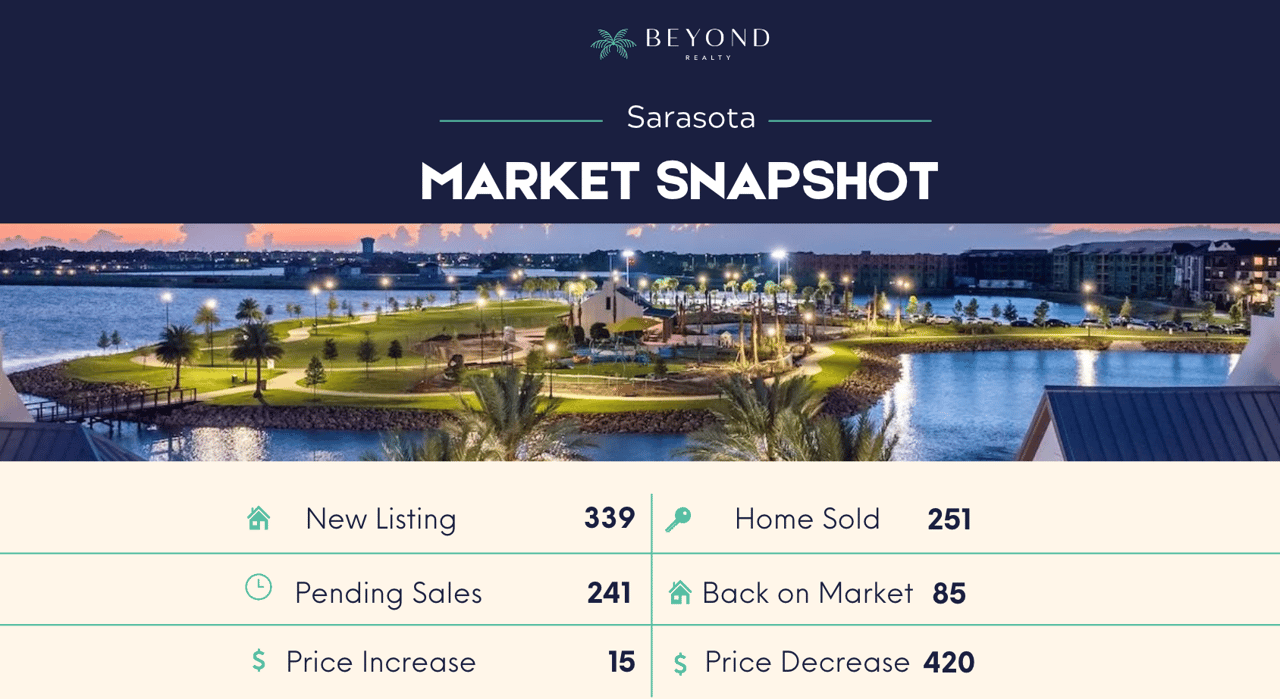
Closed Sales and Pending Activity Rise in Sarasota County as Pricing Adjustments Continue Across Both Markets


You’ve got questions and we can’t wait to answer them.