Bayfront Living in the Heart of Sarasota’s Most Iconic Waterfront Corridor
Darren Dowling
Darren Dowling
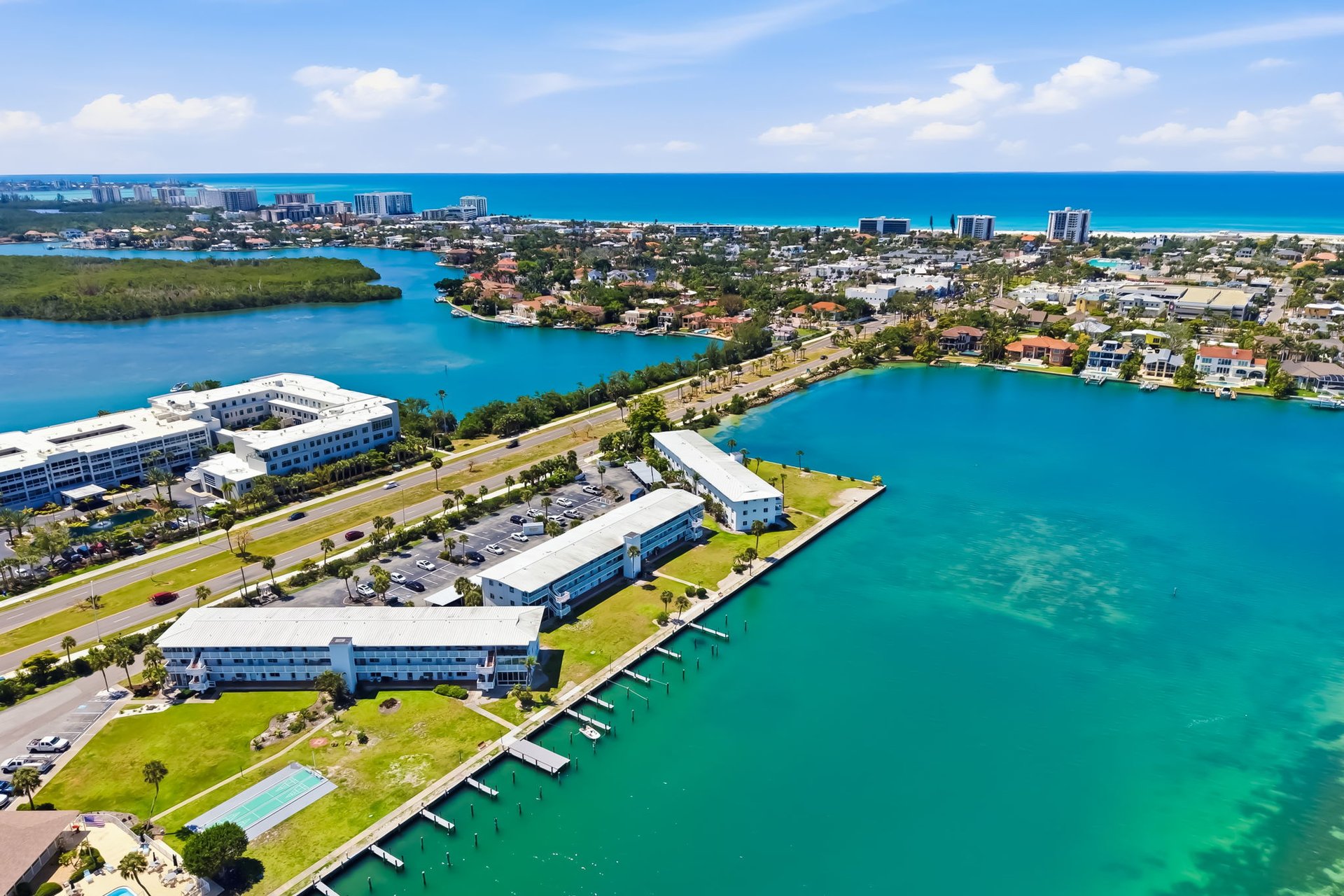
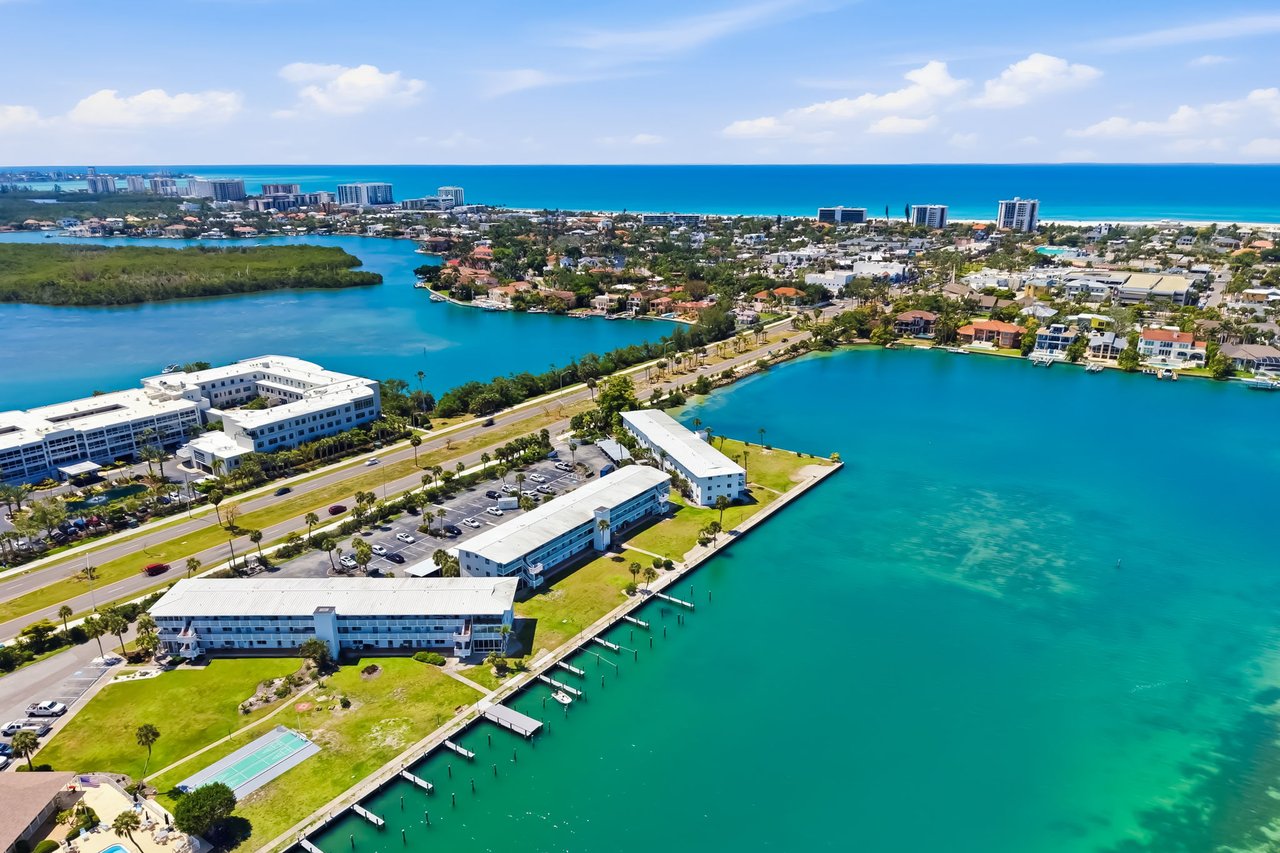
Sarasota's bayfront corridor runs along John Ringling Boulevard and the Ringling Causeway in ZIP 34236, linking downtown to Golden Gate Point, Bird Key, St. Armands Circle and Lido Key. Nearly all of it sits inside City of Sarasota limits and in FEMA mapped flood zones, so insurability and seawall condition drive cost more than view does.
The corridor follows John Ringling Boulevard west from downtown Sarasota across the Ringling Causeway, through St. Armands Circle and on to Lido Key, with Golden Gate Point at the mainland foot of the bridge and Bird Key just to the south. It is almost entirely ZIP 34236 and lies inside City of Sarasota limits.
That city boundary matters for a reason most relocating buyers miss. Sarasota County contains both incorporated cities and large unincorporated areas, and a parcel inside city limits is assessed City of Sarasota millage in addition to the county's. A bayfront condominium and an inland home in unincorporated Sarasota County are taxed by different combinations of authorities, so comparing them on list price alone understates the difference.
The corridor also includes the Harding Circle Historic District on St. Armands Key, which is listed on the National Register of Historic Places and traces back to John Ringling's development of the keys.
Waterfront is not one product. On this corridor, the water type and the access it provides are what set price, insurance and usability, and two homes described as bayfront can be entirely different purchases.
Water type | What it means | What to check |
|---|---|---|
Gulf front | Direct Gulf of Mexico frontage, typically Lido Key | Zone VE exposure, wave action, erosion history |
Bay front | Direct Sarasota Bay frontage with open water views | Seawall age and condition, zone AE or VE |
Canal with direct access | No fixed bridge between you and the Gulf | Water depth at low tide, channel maintenance |
Canal behind a fixed bridge | Bridge clearance limits boat height permanently | Measured clearance, not the brochure figure |
Bay view, not bay front | Water view without frontage | Whether the view is protected by anything |
Marina or assigned slip | Dock rights through an association | Deeded versus assigned, transfer rules, waitlist |
The practical difference is large. Direct Gulf access without a fixed bridge supports a sailboat or a larger powerboat. The same canal behind a fixed bridge supports neither, regardless of how the listing describes it.
On the bayfront the carrying costs rather than the purchase price decide whether the budget works. Windstorm and flood insurance, the condominium association's assessments, city plus county millage, and eventual seawall or dock capital costs are the four that move the number most.
Cost line | What drives it here | Why buyers get surprised |
|---|---|---|
Windstorm and hazard insurance | Roof age, construction type, distance to open water | Quoted before roof age and build type are confirmed |
Flood insurance | Mapped zone, elevation, replacement cost under Risk Rating 2.0 | Two units in the same building can price differently |
Property tax | City of Sarasota plus Sarasota County millage | Seller's Save Our Homes cap does not transfer to you |
Condominium assessments | Reserve funding, milestone inspection findings | A pending special assessment attaches to the unit |
Seawall and dock | Age, condition, permit history | Capital cost that arrives with little warning |
Master versus unit policy | What the association covers and what it does not | The gap between the two is where owners get caught |
Do not budget from the seller's current property tax bill. It reflects their accumulated Save Our Homes benefit, which does not transfer, so a new owner's assessed value generally resets and the bill can be materially higher.
Most of this corridor sits in FEMA mapped high risk flood zones, and the mapped zone can change within a block. Under Risk Rating 2.0, FEMA prices flood risk using property specific characteristics such as elevation, distance to water and replacement cost rather than by zone alone.
Zone AE indicates a high risk area with a base flood elevation, and a federally backed lender will generally require flood insurance. Zone VE adds coastal wave action and is the most restrictive and most expensive designation, and it appears on parts of the Gulf side. Zone X means a parcel is mapped outside the high risk area, which affects lender requirements rather than physical risk.
For a condominium, the building's elevation and the floor your unit sits on both matter, and so does what the association's master flood policy actually covers versus what remains your responsibility. That division is set by the association's documents and is not uniform between buildings. Get a real insurance quote on the specific unit rather than an estimate.
Florida law requires milestone structural inspections for condominium buildings of three stories or more at defined ages, and requires associations to complete structural integrity reserve studies and fund reserves for specified structural components. These requirements have been amended more than once, so confirm the current obligation and the specific building's status.
For an older waterfront building, this is the most consequential part of due diligence. Salt air, seawalls and age combine to make deferred structural work expensive, and the cost lands on owners through special assessments. A building that has completed its milestone inspection, holds a current reserve study and is funding reserves is a fundamentally different purchase from one that has deferred any of those steps, even if the two units look identical.
Request the milestone inspection report and its findings, the structural integrity reserve study, the current budget and reserve balances, recent meeting minutes, the master insurance and master flood policies, and the status of any special assessment that has been levied, discussed or is pending.
Dock access on this corridor comes in several forms, and the differences are financial as well as practical. A deeded slip conveys with the unit. An assigned slip may be reallocated by the association. A waitlist is not access at all.
Beyond the ownership question, confirm the measured bridge clearance between the slip and open water, the water depth at mean low tide, and the condition and permit history of the dock and seawall. A slip that cannot float your boat at low tide, or that sits behind a bridge your mast will not clear, is not usable no matter what the listing says.
Each pocket on this corridor has a distinct character, price profile and product type, and they are not interchangeable even though they sit within a few minutes of each other.
Area | Character | Typical product |
|---|---|---|
Golden Gate Point | Small peninsula at the mainland foot of the causeway | Low rise and boutique condominium |
Downtown bayfront, 34236 | Walkable to Main Street, arts venues and Marina Jack | Mid and high rise condominium |
Bird Key | Gated feel, canal and bay frontage, between downtown and St. Armands | Single family, many with docks |
St. Armands Key | Shops and dining at the Circle, historic district | Single family and low rise |
Lido Key | Gulf beach access, quieter than St. Armands | Condominium and single family |
Longboat Key, north of Lido | Longer, more private barrier island | Condominium and estate homes |
Walkability is the quiet advantage of the mainland end. From Golden Gate Point and the downtown bayfront you can reach Main Street, Bayfront Park, Marina Jack and the arts venues on foot, and Sarasota Memorial Hospital's main campus sits just south in ZIP 34239.
The recurring errors are treating all waterfront as equivalent, budgeting from the seller's tax bill, and assuming a dock is usable without measuring clearance and depth.
Seasonal traffic is the other adjustment. The Ringling Causeway is the only direct route between downtown and St. Armands and Lido, and it carries very different volumes in February than in August. If a quick trip to the beach or into downtown is part of why you are buying here, measure it during the winter season rather than in the quiet months.
The corridor is ZIP 34236, which covers downtown Sarasota, the bayfront, Golden Gate Point, Bird Key, St. Armands Key and Lido Key. The entire area sits within the incorporated City of Sarasota, which matters for property tax because City of Sarasota millage applies in addition to Sarasota County millage. Nearby addresses are often confused with it: Sarasota Memorial's main campus is in 34239 to the south, and The Ringling museum estate is in 34243 to the north, not on this corridor.
Most of it is. The corridor includes FEMA mapped zone AE areas and zone VE areas on parts of the Gulf side, and the mapped zone can change within a block, so the determination is parcel specific rather than area wide. Under Risk Rating 2.0 FEMA prices flood risk using property specific characteristics such as elevation, distance to water and replacement cost rather than by zone alone, so two units in the same building can carry different premiums. Verify the mapped zone and get a real quote for the specific unit.
No, and the distinctions matter financially. Some units convey a deeded slip, which transfers with ownership. Others have an assigned slip that the association can reallocate, and some buildings maintain a waitlist, which is not access at all. Even where a slip exists, confirm the measured bridge clearance between the slip and open water, the water depth at mean low tide, and the permit history and condition of the dock and seawall. A slip behind a fixed bridge will not accommodate a sailboat regardless of how it is advertised.
Bay front means the property fronts Sarasota Bay, which gives open water views and protected water. Direct Gulf access means a boat can reach the Gulf of Mexico without passing under a fixed bridge, which is a question about navigation rather than about the view. A property can be bay front without direct Gulf access if a fixed bridge sits between it and the passes, and a canal home with no bay view can have excellent direct access. Define which one you actually need before shopping.
Yes. Golden Gate Point, Bird Key, St. Armands Key, Lido Key and the downtown bayfront all sit inside the incorporated City of Sarasota, so parcels there are assessed City of Sarasota millage in addition to Sarasota County millage and other applicable authorities. The homestead exemption and the Save Our Homes 3 percent assessment cap apply the same way to a bayfront primary residence, though many units on this corridor are second homes and therefore do not qualify. Confirm the certified millage for the specific parcel.
Beyond Realty verifies these per parcel and per building before you write an offer, because on the bayfront the building and the water are as consequential as the unit. That means confirming the FEMA mapped zone and obtaining a real insurance quote, pulling the certified City of Sarasota and Sarasota County millage, checking bridge clearance and water depth for any slip, and reading the milestone inspection, reserve study, budget, minutes and master policies for the association.
Specific bayfront listings on this corridor change frequently, and availability and pricing move quickly. Darren Dowling is the Broker-Owner of Beyond Realty and represents buyers and sellers throughout Downtown Sarasota, Golden Gate Point, Bird Key, St. Armands, Lido Key and Siesta Key. For current availability or to have a specific address checked, get in touch or read more about Darren.
Darren Dowling, Broker-Owner, Beyond Realty, 2170 Main Street, Suite 103, Sarasota, FL 34237, (941) 204-0493.

How VA Home Loan Benefits, More Negotiating Opportunities, and Local Real Estate Market Conditions Could Help Veterans and Active-Duty Service Members Buy a Home in Sa… Read more


What Buyers and Sellers Need to Know About Mortgage Rates, Home Values, and Real Estate Market Trends in Sarasota, Lakewood Ranch, Manatee County, and Charlotte County.
Closed Sales and Pending Activity Rise in Sarasota County as Pricing Adjustments Continue Across Both Markets

You’ve got questions and we can’t wait to answer them.