Florida Amendment 3 Passed: Why December 31, 2026 Matters for Buyers Moving to Sarasota and Lakewood Ranch
Darren Dowling
Darren Dowling
By Darren Dowling, Founder, Beyond Realty | Updated November 4, 2026
Florida voters approved Amendment 3 on November 3, 2026, the biggest change to the state's homestead exemption in nearly 20 years. If you are planning a move to Sarasota, Lakewood Ranch or anywhere in Florida, one date now matters more than any other: December 31, 2026. Here is what changed, what it means for buyers, sellers and second-home owners in Sarasota and Manatee counties, and what to do next.
Amendment 3, titled on the ballot Increased Homestead Exemption; Lower Cap on Increases in Non-Homestead Property Assessments (WPTV), takes effect January 1, 2027. The first tax bills affected arrive in November 2027 (Manatee County Property Appraiser).
Sources: Florida Chamber, Florida TaxWatch, Kaufman Rossin.
The amendment treats two groups differently:
Permanent Florida residents as of December 31, 2026 can receive the larger exemption ($150,000 in 2027, $250,000 in 2028) once they own a primary residence and qualify for homestead. You do not have to buy before December 31. A renter who genuinely moved to Florida by then can generally qualify when they buy later.
People who become residents on or after January 1, 2027 start with the current exemption of about $50,000, indexed to inflation beginning in 2028, and generally receive the larger exemption in their fifth year of homestead exemption. A buyer who moves in 2027 and first qualifies in 2028 would ordinarily reach it in 2032 (Sarasota Magazine).
Two details to know. Starting in 2030, a county or city may shorten the five-year wait for its own taxes by a two-thirds vote. And the new-resident rule applies "to the extent permitted by the U.S. Constitution," so courts or implementing legislation could still shape how it works (Kaufman Rossin).
Savings depend on your assessed value and local millage. Florida TaxWatch offers a simple formula: multiply your total non-school millage by $98.59 for 2027 and $198.59 for 2028. At the statewide average of 10.5 mills, that is about $1,035 in 2027 and $2,085 in 2028 (Florida TaxWatch).
The trade-off is local budgets. Suncoast Searchlight reported projected shortfalls of $241 million over two years for Sarasota County, and local officials are discussing hiring freezes, delayed projects and new fees (Suncoast Searchlight). Buyers should watch for changes in fees and assessments, not just the tax rate.
If Florida is already in your plans, talk to your CPA now. December 31 is weeks away. A genuine move by then could reach the larger exemption years sooner. Residency must be real, not on paper.
You do not need to buy before year-end. Renting first while you choose the right neighborhood can still preserve your eligibility.
Estimate taxes on your purchase price. A home is reassessed at market value after a sale, so your bill can be far higher than the seller's. Apply your expected exemption to the price you pay.
Look at total cost of ownership. Insurance, HOA dues, CDD assessments and club fees often matter as much as taxes. Compare real numbers in our guides to Lakewood Ranch Country Club, The Lake Club, Country Club East, Wild Blue at Waterside and The Founders Club.
Start with our complete Sarasota relocation guide, compare areas in our Lakewood Ranch and Wellen Park neighborhood guides, and see what you could save on income taxes with the Florida Tax Advantage Savings Calculator, plus our breakdowns for Illinois and Michigan and California.
A new selling point. Lower ongoing taxes make Florida homeownership more attractive, especially to buyers who can establish residency by December 31.
Portability still works. If you sell and buy another Florida homestead, you can still carry Save Our Homes savings with you. Amendment 3 does not change portability.
Possible tighter inventory. Lower carrying costs could lead some owners to stay put longer, which can help well-priced listings stand out.
Thinking about selling? Get a free home valuation and follow local trends in our Sarasota and Manatee market report.
Second homes, rentals and commercial property do not get the larger homestead exemption. They do benefit from the lower 5 percent annual cap on assessed value increases for non-school taxes, which matters most in years when values rise quickly. For downtown condo buyers comparing buildings and rental rules, see our Downtown Sarasota luxury condo guide.
Your permanent residence, or domicile, should reflect where you genuinely live. Common steps include:
Getting a Florida driver's license and registering your vehicles.
Registering to vote in Florida.
Filing a Declaration of Domicile with your county Clerk of Court.
Moving your home, belongings, mail and key professional relationships to Florida.
Updating financial, legal and tax records to match your new domicile.
No single document guarantees residency. If you are leaving a high-tax state such as New York, New Jersey, Illinois or California, ask your CPA or tax attorney about the rules in your former state.
Residency and homestead are separate. To claim homestead, you must own the home and make it your permanent residence as of January 1 of the tax year, then apply with the county property appraiser by March 1. Sarasota County buyers can start at the Sarasota County Property Appraiser, and Manatee buyers at the Manatee County Property Appraiser.
Yes. Florida voters approved Amendment 3 on November 3, 2026, with about 62 percent of the vote, above the 60 percent required for a constitutional amendment. Support topped 62 percent in Sarasota County and reached 65 percent in Manatee County.
January 1, 2027. The first property tax bills affected will be the November 2027 bills. The homestead exemption for non-school taxes rises to $150,000 for 2027 and $250,000 for 2028, with inflation adjustments starting in 2029.
No. The amendment looks at whether you maintained a permanent residence in Florida as of December 31, 2026, not whether you owned a home. Someone who genuinely moved to Florida by that date, including a renter, can generally qualify for the larger exemption once they buy a primary residence and meet the homestead rules. Confirm your situation with a CPA or tax attorney.
You start with the current non-school homestead exemption of about $50,000, adjusted for inflation beginning in 2028, and generally receive the larger exemption in your fifth year of homestead exemption. For example, a buyer who moves in 2027 and first qualifies for homestead in 2028 would ordinarily reach the larger exemption in 2032. Starting in 2030, a county or city can shorten that wait for its own taxes by a two-thirds vote.
It depends on the home's assessed value and local millage rates. For a City of Sarasota home assessed at $300,000, Sarasota Magazine estimated savings of about $866 in 2027 and $1,745 in 2028. Suncoast Searchlight reported average savings by 2028 of about $700 a year in Sarasota County and $1,200 a year in Manatee County.
No. It raises the homestead exemption for non-school property taxes only. School taxes keep the existing $25,000 exemption, and local governments still set their own millage rates and can add fees and assessments.
Partly. Second homes, rentals and commercial property do not get the larger homestead exemption. Instead, the annual cap on assessed value increases for non-homestead property drops from 10 percent to 5 percent for non-school taxes.
No. The Save Our Homes cap, which limits annual assessed value increases on a homestead to 3 percent or the change in CPI, whichever is lower, stays in place, and so does portability of Save Our Homes savings when you move within Florida.
Often, yes. A home is reassessed at market value after a sale, so a buyer's tax bill can be much higher than the seller's. Always estimate taxes on the purchase price with your homestead exemption applied, not on the seller's current bill.
Darren Dowling, Founder of Beyond Realty in Sarasota, helps relocation buyers from New York, New Jersey, Illinois, Michigan and California plan their move, compare Sarasota, Lakewood Ranch, Wellen Park and the barrier islands, and model the full cost of ownership with the new homestead rules. Beyond Realty is a RealTrends America's Best Top 1.5 percent team. Book a Strategy Session or call 941-204-0493.
Darren Dowling is the Founder of Beyond Realty, a boutique brokerage in downtown Sarasota and a RealTrends America's Best Top 1.5 percent team nationwide. After selling real estate in London, Dubai, the Spanish Islands and the Caribbean, he moved to the area around 2008, first living in North Port before settling in Sarasota, and has been a licensed Realtor since 2015. He specializes in relocation buyers from high-tax states and luxury homes across Sarasota, Lakewood Ranch and the Gulf Coast barrier islands.
Darren Dowling, Founder
Beyond Realty
2170 Main Street, Suite 103, Sarasota, FL 34237
Direct: 941-204-0493 | Office: (941) 467-3448
[email protected] | www.beyondrealtyfl.com
SOURCES
Florida voters approve Amendment 3, Bay News 9, Nov. 4, 2026
Amendment 3 passes, leaving Suncoast leaders facing tough choices, Suncoast Searchlight, Nov. 2026
What Amendment 3 Could Mean for Sarasota and Manatee Real Estate, Sarasota Magazine, Oct. 2026
Florida's 2026 Property Tax Amendment 3, Florida Chamber of Commerce
Florida Amendment 3: What individuals, businesses and investors need to know, Kaufman Rossin
Florida releases court-ordered rewrite of Amendment 3 ballot language, WPTV, Aug. 2026
This article is general information, not tax, financial or legal advice. The Legislature may pass implementing laws that clarify how Amendment 3 applies. Consult your CPA, tax attorney or county property appraiser before making residency or property tax decisions. Last updated November 4, 2026.
Why Sarasota, Lakewood Ranch, Manatee County, and Charlotte County homeowners can still sell confidently even as canceled contracts make headlines.
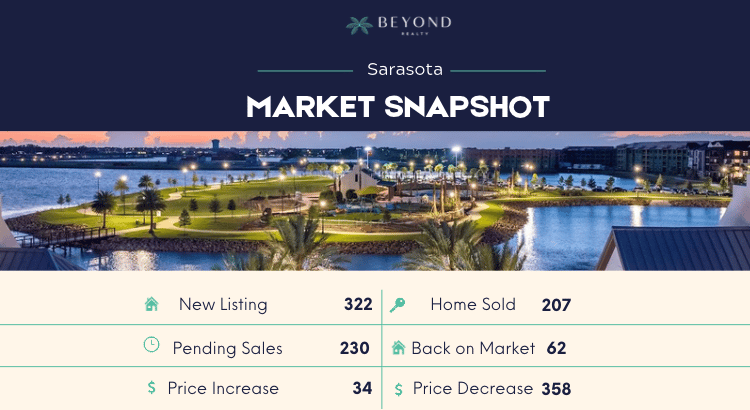
Closed Sales Increase in Both Counties as Sarasota and Manatee Market Activity Shifts
You’ve got questions and we can’t wait to answer them.