Leave a Message

Thank you for your message. We will be in touch with you shortly.

How the Economy Impacts Mortgage Rates

Beyond Realty

How the Economy Impacts Mortgage Rates

How the Economy Impacts Mortgage Rates


As someone who’s thinking about buying or selling a home, you’re probably paying close attention to mortgage rates – and wondering what's ahead.

One thing that can affect mortgage rates is the Federal Funds Rate, which influences how much it costs banks to borrow money from each other. While the Federal Reserve (the Fed) doesn’t directly control mortgage rates, they do control the Federal Funds Rate.

The relationship between the two is why people have been watching closely to see when the Fed might lower the Federal Funds Rate. Whenever they do, that’ll put downward pressure on mortgage rates. The Fed meets next week, and three of the most important metrics they’ll look at as they make their decision are:

  1. The Rate of Inflation
  2. How Many Jobs the Economy Is Adding
  3. The Unemployment Rate

Here’s the latest data on all three.

1. The Rate of Inflation

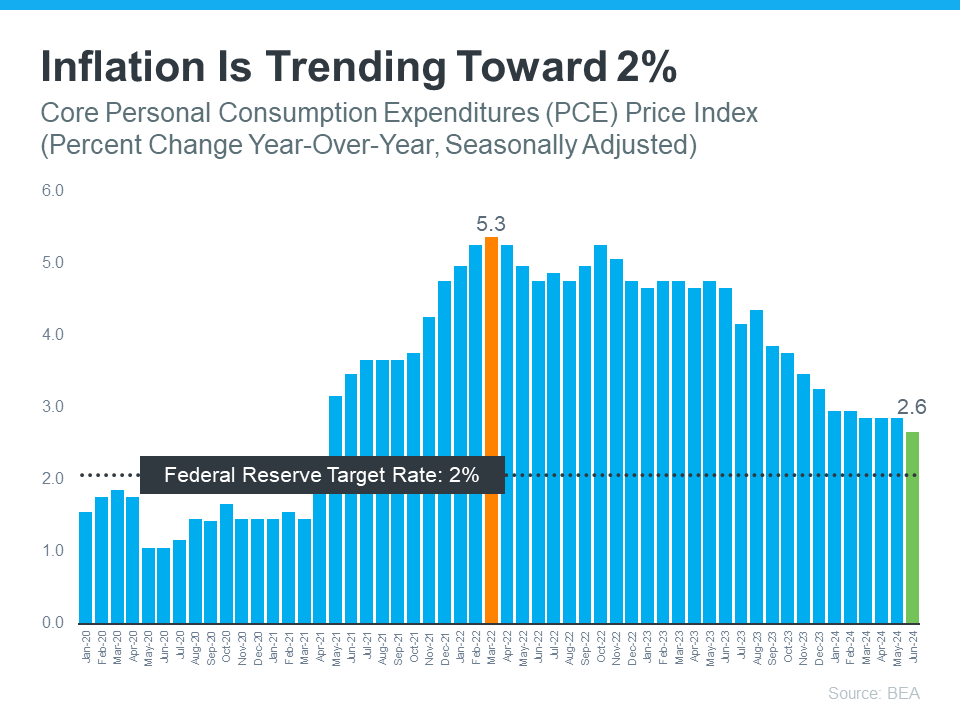
You’ve probably heard a lot about inflation over the past year or two – and you’ve likely felt it whenever you’ve gone to buy just about anything. That’s because high inflation means prices have been going up quickly.

The Fed has stated its goal is to get the rate of inflation back down to 2%. Right now, it’s still higher than that, but moving in the right direction (see graph below):
2. How Many Jobs the Economy Is Adding

The Fed is also watching how many new jobs are created each month. They want to see job growth slow down consistently before taking any action on the Federal Funds Rate. If fewer jobs are created, it means the economy is still strong but cooling a bit – which is their goal. That appears to be exactly what’s happening now. Inman says:

“. . . the Bureau of Labor Statistics reported that employers added fewer jobs in April and May than previously thought and that hiring by private companies was sluggish in June.”

So, while employers are still adding jobs, they’re not adding as many as before. That’s an indicator the economy is slowing down after being overheated for quite some time. This is an encouraging trend for the Fed to see.

3. The Unemployment Rate

The unemployment rate is the percentage of people who want to work but can’t find jobs. So, a low rate means a lot of Americans are employed. That’s a good thing for many people.

But it can also lead to higher inflation because more people working means more spending – which drives up prices. Right now, the unemployment rate is low, but it’s been rising slowly over the past few months (see graph below):

No Caption ReceivedIt may seem harsh, but a consistently rising unemployment rate is something the Fed needs to see before deciding to cut the Federal Funds Rate. That’s because a higher unemployment rate would mean reduced spending, and that would help get inflation back under control.

What Does This Mean Moving Forward?

While mortgage rates are going to continue to be volatile in the days and months ahead, these are signs the economy is headed in the direction the Fed wants to see. But even with that, it’s unlikely they'll cut the Federal Funds Rate when they meet next week. Jerome Powell, Chair of the Federal Reserve, recently said:

“We want to be more confident that inflation is moving sustainably down toward 2% before we start the process of reducing or loosening policy.”

Basically, we’re seeing the first signs now, but they need more data and more time to feel confident that this is a consistent trend. Assuming that direction continues, according to the CME FedWatch Tool, experts say there’s a projected 96.1% chance the Fed will lower the Federal Funds Rate at their September meeting.

Remember, the Fed doesn’t directly set mortgage rates. It’s just that whenever they decide to cut the Federal Funds Rate, mortgage rates should respond.

Of course, the timing of when the Fed takes action could change because of new economic reports, world events, and other factors. That’s why it's usually not a good idea to try to time the market.

Bottom Line

Recent economic data may signal that hope is on the horizon for mortgage rates. Let’s connect so you have an expert to keep you up to date on the latest trends and what they mean for you.
Recent Blog Posts

Why More Homes Are for Sale in Sarasota and Lakewood Ranch: What Buyers and Sellers Need to Know

Rising mortgage rates, growing housing inventory, and longer selling times are creating new opportunities in Sarasota, Lakewood Ranch, Manatee County, and Charlotte Co… Read more

Mastering the Market: Your Guide to Pricing and Selling Your Home in Sarasota, Manatee, and Charlotte Counties

A practical guide to pricing your home competitively, attracting qualified buyers, and navigating the Sarasota-area real estate market. Copy

Why Most People Are Still Glad They Bought a Home With everything going on, it’s understandable if you’re wondering if you’d regret buying right now.  Everyday expenses cost more. Mortgage rates are higher than you’d like. And when the economy feels uncertain, taking on a mortgage can feel like a much bigger leap. But here’s some perspective that may help… Most people who already made that leap would do it again. According to a recent survey from NerdWallet, the vast majority of recent buyers (74%) were glad they bought their current home. Only a very small 3% of people regret it: And here’s a big reason why so many people feel it was worth it, even now. Homeownership Is a Long-Term PlayWhen you’re deciding whether to buy, it’s easy to focus on what’s happening right now. What’s today’s mortgage rate? Are prices going up or down? Those things matter. But don’t get so caught up in buying in the perfect moment that you miss the bigger picture. A home isn’t typically something you buy for just a year or two. It’s a longer-term play. And when you zoom out, it all starts to fall into perspective – especially if you look at home prices and equity. According to data from the Federal Housing Finance Agency (FHFA), home prices nationally have risen 33.4% over just the past five years (see map below): And that appreciation has helped current homeowners build some serious wealth. Research from Bankrate shows homeowners gained an average of nearly $150,000 in wealth over the past five years as equity steadily rose across 90% of major metro areas. That’s one of the biggest benefits of homeownership. As you pay down your mortgage and your home appreciates over time, your ownership stake – your equity – can grow. Now, Zoom Out Even FurtherThe five-year numbers are impressive. But the numbers get even more dramatic when you look at decades instead of individual market cycles. FHFA data shows home prices nationally have risen 336% since 1991. Sit with that for a second. Three hundred percent (see map below):   That doesn't mean prices go up every single year. And it doesn't mean buying is automatically the right decision for everyone today. You should only buy when the numbers (and the payment) work for you. What it does show is why trying to perfectly time the market can make you miss the bigger picture.  Over time, homeowners gain a lot of equity. And that equity can eventually become a powerful financial resource. As Freddie Mac explains:  “Your home's equity is part of your total wealth as a homeowner. If you decide to sell your home, the equity you have built over time will come back to you in the sale. . . If it's time to upsize or downsize, you can use that cash for the down payment on your next home.” Basically, if you can afford to do it, buying a home now could set you up for future moves. And just in case you’re someone who’s worried about what happens if prices do fall, after you buy, remember: you’re not buying for one year. Prices can dip. They have before. But historically, they’ve risen far more over the long run. And the longer you own your home, the more time you have to ride out those ups and downs and keep building equity. Bottom LineDon’t let today’s uncertainty make you lose sight of what homeownership can do over time. Most homeowners say they’d make the same choice again. And decades of home-price growth help explain why. If you’re wondering whether buying makes sense for you right now, let’s look at the numbers together – and what owning a home could mean for you in the years ahead.

Discover how long-term homeownership can help build equity and financial stability, and what buyers should consider when purchasing a home in Sarasota, Lakewood Ranch,… Read more
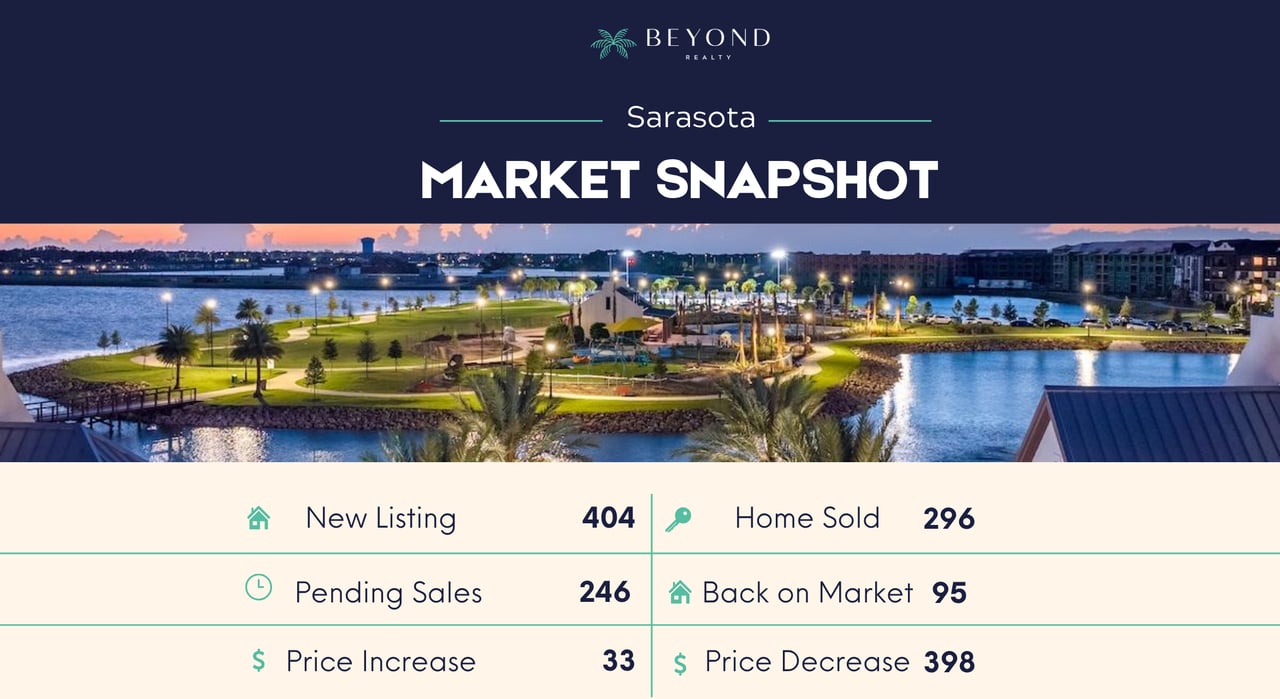

Sarasota market snapshot infographic with waterfront panorama and real estate sales statistics.
🏠 Home Sale Market Snapshot: Sarasota & Manatee Counties | October 2–8, 2026

A Fountain powerboat speeds across ocean water as a helicopter flies overhead.
Sarasota Weekend Events: October 10–11, 2026

From offshore powerboat racing and classic cars to live music, soccer, and Oktoberfest fun, discover what’s happening around Sarasota this weekend.

Aerial view of a bridge over turquoise water beside a white-sand beach and coastal homes.
Sarasota, Manatee & Charlotte County Market Report (August 2026): Two Counties Crossed Into Seller's Markets. All Three Sold Fewer Homes.

Let's Talk

You’ve got questions and we can’t wait to answer them.

Follow Us on Instagram